Installation & replacement cost estimator
Septic system installation cost, line by line
A new septic system typically costs $7,600–$12,100 installed for a standard 3-bedroom setup — but the honest answer is a build-up, not a single number. Set your state, system and job below: every line of the estimate is priced from a published source, named right on the line.
Build your estimate
What a typical job is made of
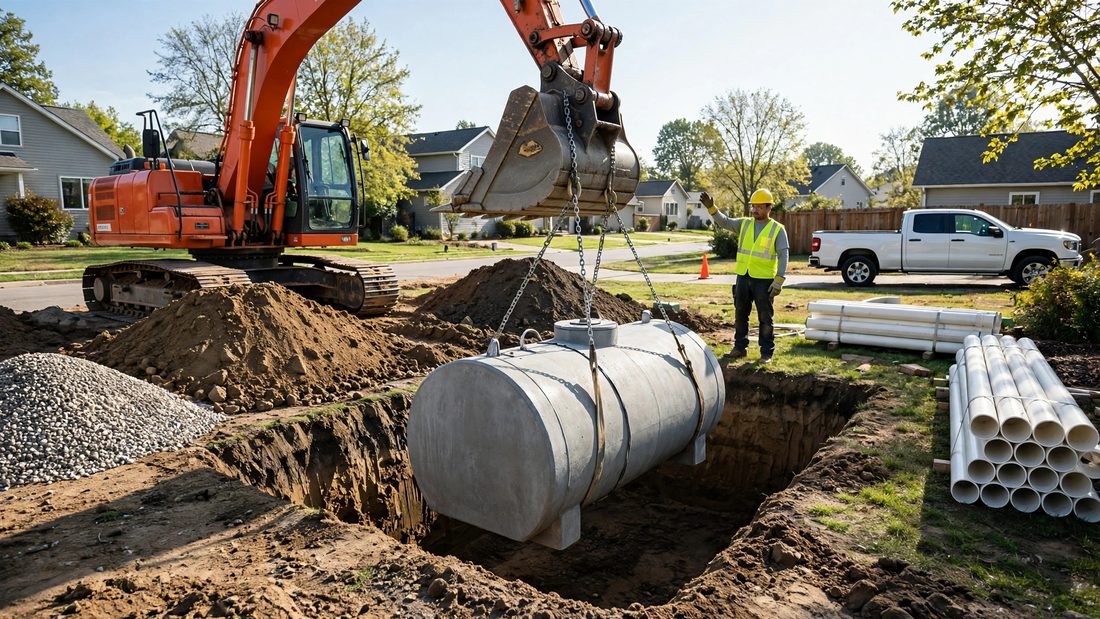
For a conventional 3-bedroom system with a concrete tank in a typical-cost state, our build-up looks like this — every line priced, every price sourced (method page has the receipts):
| Line item | Range | Source type |
|---|---|---|
| Soil test (perc / site evaluation) | $750 – $1,900 | Published guide range |
| Permit (typical counties) | $250 – $700 | Published price |
| Concrete tank (precast, before delivery) | $1,410 – $1,530 | Published price |
| Tank delivery & setting (crane truck) | $200 – $500 | Published guide range |
| Drainfield material (pipe & gravel) | $1,500 – $4,000 | Published guide range |
| Risers, filter & fittings | $300 – $500 | Published price |
| Excavation, labor & equipment (estimate) | $3,200 – $5,300 | Our estimate |
Adding every line above at face value gives $7,610–$14,430 — that full stack is the assembled range. The estimator shows the lower two-thirds of it ($7,600–$12,100), because each line's range carries its own cushion and no real job lands at the top of every line at once.
Cost by state
Same 3-bedroom conventional system, ten states — permit fees and labor levels move the total more than the tank does:
The two bills before the big bill
A perc test / soil evaluation ($750–$1,900) decides what kind of field your land allows — fail it, and a mound or engineered system can add thousands. Buying or selling instead? A septic inspection is a separate, smaller cost with its own rules about who pays.
Septic tank pumping cost — the smaller, regular bill
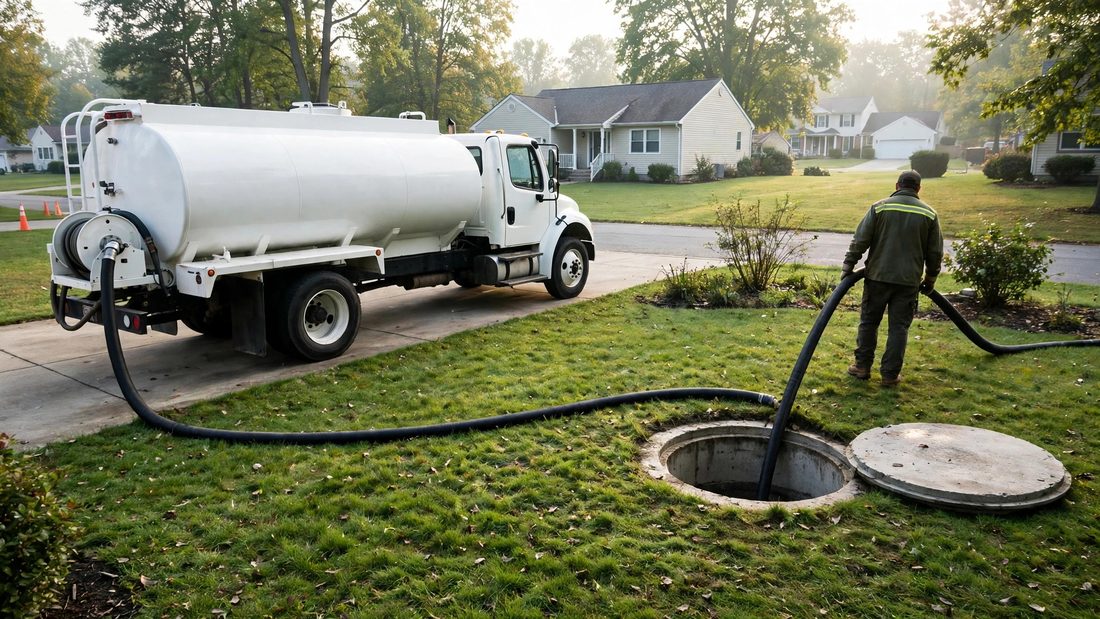
Installation is the once-in-decades bill; pumping is the one that comes back. A pump-out typically runs $300–$600 for a standard tank — priced per visit by haulers, not from a state fee schedule, so treat any single "average pumping cost" figure with suspicion. How often it is due is a sizing question, not a calendar slogan: solids build up at a rate set by household size and tank volume, and the common every-3-to-5-years advice assumes a typical family in a typical tank. A small tank with a garbage disposal fills measurably faster — one more reason the disposal rules above matter. When a system is replaced instead of pumped, the old tank is usually pumped as part of the job; that removal work is already a line in the replacement estimate above, not a second bill.
Cost questions
Why is septic installation so expensive?
Because most of the money is underground work, not the tank. In our line-by-line build-up of a typical job, excavation, labor and equipment come to roughly 40% of the total, the drainfield is the biggest material cost, and the tank itself is often under a fifth of the bill. The estimator above shows every line with its source so you can see where your quote goes.
What is the most expensive part of a septic system?
Usually the drainfield — the network of pipes or chambers that treats the water in your soil. It is the largest material line in most builds, and if an old system fails, a replacement field is often the biggest single cost. That is also why a failed perc test (which can force a mound or engineered field) moves the price more than any other single event.
How much does it cost to replace just the tank, or just the drainfield?
Less than a whole system — and you should never be quoted the full-system range for a partial job. Choose 'Replace a system' in the estimator, then 'Tank only' or 'Drainfield only': each mode is priced from its own lines, not sliced out of the full-system band.
How much does septic tank replacement cost?
Replacing a whole system usually lands close to a new installation — the excavation, tank and field work are the same — plus the cost of dealing with the old system: pumping it out and decommissioning or removing the old tank. Replacing only the tank, or only the drainfield, costs much less than the full range. Pick 'Replace a system' in the estimator above and choose what is actually being replaced; each mode is priced from its own lines.
What does drain field replacement cost?
The drainfield is usually the largest single line in a system — the pipes or chambers and the groundwork around them — so a field-only replacement is often the biggest partial job, commonly several thousand dollars and up. It is priced as its own mode ('Drainfield only') in the estimator, from the same sourced lines as a new field.
Do these estimates include permits and the soil test?
Yes, for a full new system: the soil evaluation and the permit are the first two lines. Permit fees come from actual county fee schedules — typically $250–$700, and $1,300–$2,500 in high-regulation counties.